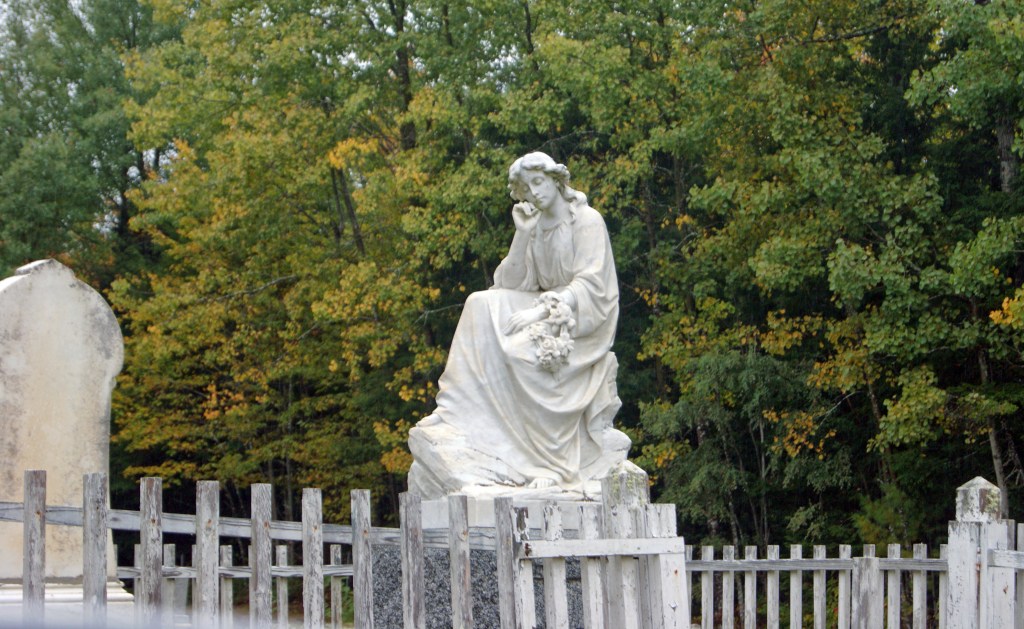
In a recent article titled “Your Legacy”, Richard Simmons III asked the question , “What do you want to be remembered for?” He said that “Once your earthly life is over, your reputation will become your legacy.” Then he quoted from author David Brooks book The Road to Character in which the author differentiates between “resume virtues” and “eulogy virtues”:
“Resume virtues are professional and oriented toward earthly success. They require comparison with others. Eulogy virtues are ethical and spiritual and require no comparison. Your eulogy virtues are what you really would want people to talk about at your funeral…”
Although Simmons’ article makes thoughtful points, resumes and eulogies are obviously about us. But life is not all about us! We are meant for something more grand, more eternal, than a nice goodbye speech which will soon be forgotten regardless of the amount of good deeds done, nice relationships held, and fine words said. We are messengers with a story to live and tell. The book of Proverbs wisely exhorts: “Direct your children onto the right path, and when they are older, they will not leave it.” (Proverbs 22:6) That idea raises the question of ethics. What is the basis of our advice? The Apostle Paul encouraged “Fathers” to bring their children up “with the discipline and instruction that comes from the Lord.” (Ephesians 6:4) So, according to Scripture, God’s principles for living are foundational to the development of ethical thought and behavior.
Scripture is replete with exhortations to not only Jews and Christians but to all people about teaching succeeding generations who God is and about His love for humanity. Moses gave specific instructions that the Israelites teach, live, and continually talk with their children about God and His works and Laws. (Deuteronomy 6:6-9)
The Psalmist testified many times to this crucial generational responsibility: “O God, from my youth you have taught me, and I still proclaim your wondrous deeds/So even to old age and gray hairs, O God, do not forsake me, until I proclaim your might to another generation, your power to all those to come. (Psalm 71:17-19) He did this because God “apppointed a law in Israel, which he commanded our fathers to teach to their children, that the next generation might know them, the children yet unborn, and arise and tell them to their children, so that they should set their hope in God and not forget the works of God, but keep his commandments…” (Psalm 78:2-8)
The prophet Isaiah proclaimed and the Apostle Paul echoed the beauty embodied in this generational process: “How beautiful upon the mountains are the feet of him who brings good news, who publishes peace, who brings good news of happiness, who publishes salvation… ” (Isaiah 52:7) (Romans 10: 14-15)
Encouraging giftednesss, integrity, hard, work, generosity, compassion and the enjoyment of life are important to raise heathy children who are good citizens, but all accomplishments, wealth, and fun will one day mean nothing. In contrast, a relationship with God will mean everything.
The Christian community has just celebrated Easter and the confidence that forgiveness and eternal life are found through belief in Christ’s atoning death and triumphant resurrection. Every generation and every tongue deserve to know the awesomeness, the love, the miraculous power, the miracles, the splendor, and the greatness of God so they can “hope” in God and live rightly in His image.(Psalm 145:3-6)
That message must be spoken out loud. Otherwise, no generation will know the good news of God and His redemptive acts or understand Christ’s saving sacrifice on the cross for them. Everyone not only deserves to hear the Gospel but also to see authentic faith lived out and to have an opportunity to respond.
Some of those “beautiful feet upon the mountains” belong to parents, grandparents, families, teachers , mentors, and churches who have a tremendous and increasingly difficult responsibility to speak and live Christ’s Good News in an expanding humanistic society. Their lasting legacies of words, teachings, values, and efforts for the common good will spring from lives of devotion and will undoubtedly be noted in eulogies written on hearts which will have found faith.
Those are convicting thoughts. How are we doing?
 Sweet Words from Maine