Eagle flying along the Taunton River, Sullivan, Maine
Bald eagles are definitely forces “to be reckoned with”. They have powerful talons which can exert ten times the pressure of an adult male human hand and can have up to seven foot wingspans enabling them to catch updrafts and soar thousands of feet in the air where their amazing visual and color acuities allow them to spot signs of small prey and fish. Their attacks may be unsuspected and swift, but their presence is formidable and commands tremendous respect.
One might expect them to have a pleasant, satisfied demeanor. Yet, even though they control the skies and hold powerful predator status among the animal kingdom, their countenance seems very intent, maybe even angry, or somewhat scary! However, they must be content because they are long-lived, mate for life, and build mega-mansion nests where they patiently but clumsily protect their eggs, feed their young until they fledge, and parent them for a few months after fledging.
The are majestic, even regal, symbols of the beauty and independence of American democracy. Furthermore, they have a spiritual allure about them. Their feathers are honored as messengers of spirits by some Native American cultures. Ancient biblical authors used the eagle’s nature as expressive metaphors for God’s powerful presence and nurturing care for His people. He destroyed the evil intent of those who pursued Israel in the Exodus and later reminded them : “You have seen what I did to the Egyptians, and how I bore you on eagles’ wings, and brought you to myself.” (Exodus 19:4).
Moses used eagle imagery to express God’s love for Israel: “Like an eagle that stirs up its nest, that flutters over its young, spreading out its wings, catching them, bearing them on its pinions, the LORD alone guided (them)…” (Deuteronomy 32:11-12) Such figurative language bespeaks the encouragement, support, provision, and patience God gave that nation. Similarly, His gracious attitude toward all humanity is dramatically evident in both His gift of those all-encompassing, guiding, moral principles of the Law which clarify the importance of loving God and others and also in His amazing, mercy filled, love gift—Jesus. Like the protective wings of an eagle, Jesus’ cross embraces the world for whom he died so that whosoever choses may know the peace and joy of God as He brings them to Himself.
Our childish night dreams of flying, of soaring high, disappear as life grows longer and a bit more serious and limiting! But strengthened by God’s presence, nourished and satisfied by His Word, and eternally protected by His grace, we can all fly like Eagles. Isaiah spoke of this spiritual strength, of the courage and enduring power found in a trusting faith which waits on God’s purposes. “Those that wait on the LORD shall renew their strength; they shall mount up with wings like eagles; they shall run and not be weary, they shall walk and not faint.” (Isaiah 40:31).
Many of us have carefully plucked petals from daisies hoping to find the answer we want when the last petal is removed…He loves me. He loves me not… She love me. She loves me not…They love me. They love me not…
Although formed as statements, those are really crucial questions! Despite the illogicalness of this playful mind game, we superstitiously continue trying until we receive the answer we want! That activity becomes a metaphor for our hearts which vacillate and wonder as we wade through competing proofs and uncertainties in an attempt to discern the integrity of others and how much of our emotional life should be committed to them. Love is beautiful but can be treacherous with potential for pain and despair. Because of our vulnerability we are tentative until assured.
We evaluate ideas and our deep spiritual longings similarly. We desparately want solutions to the human dilemma but face an array of confusing ideas about purpose and meaning and God. Our distracted minds want facts, but we have fragmented information upon which to build our beliefs. Our questions are many, and so are the various, answering voices which contribute to our indecisiveness and flounderings surrounding issues of faith! We have to be discerners who sort though questions and ideas about origins and cosmic design, about the essence of humanness, about suffering and injustice, and about purpose and meaning in this brief life.
There are a plethora of faith ideas… humanism and its social mores, scientism and its theories, religious philosophies with their guilt inflicted, self effort redemptive ideas about the path to righteousness and eternal bliss. However, it is possible to to be devastatingly disappointed, disillusioned, and unfulfilled by belief systems. Inner peace comes with validation. How many daisies do we have to pick before we are secure and validated by love, hope and assurance?
Jesus’ answer makes sense. It is redemptive and restorative and defines a relationship about which there can never be any doubt. He stepped into humanity and our broken, fallen world where he lived, taught and died to reveal the truth about himself, about God, and about us… the truth that God exists and loves us and that we need His redemption. His conversation with the religious leader Nicodemus directly addressed that truth and those needs:“ For God so loved the world that he gave his one and only Son, that whoever believes in him shall not perish but have eternal life.” (John 3:16) That summation in some form or another has been recognized by Kings, Prophets, Psalmists, the Apostles, and his followers. Even our own lives authenticate our need for forgiveness and redemption. We need God’s loving grace:
Indeed, there is not a righteous man on earth who continually does good and who never sins. (Ecclesiastes 7:20)
Every one of them has turned aside; together they have become corrupt; There is no one who does good, not even one. (Psalm 53:3)
Though the mountains be shaken and the hills be removed, yet my unfailing love for you will not be shaken nor my covenant of peace be removed,” says the Lord, who has compassion on you. (Isaiah 54:10)
For you, O Lord, are good and forgiving, abounding in steadfast love to all who call upon you.(Psalm 86:5)
For as high as the heavens are above the earth, so great is his steadfast love toward those who fear (revere) him…(Psalm 103:11)
But God demonstrates his own love for us in this: While we were still sinners, Christ died for us. (Romans 5:8)
This is how God showed his love among us: He sent his one and only Son into the world that we might live through him. This is love: not that we loved God, but that he loved us and sent his Son as an atoning sacrifice for our sins. Dear friends, since God so loved us, we also ought to love one another. (1John 4:9-11)
See what great love the Father has lavished on us, that we should be called children of God! And that is what we are! (1 John 3:1)
For I am convinced that neither death nor life, neither angels nor demons, neither the present nor the future, nor any powers, 39 neither height nor depth, nor anything else in all creation, will be able to separate us from the love of God that is in Christ Jesus our Lord. (Romans 8:38-39)
Some of us as children and even occasionally as adults have sung, “Jesus loves me this I know for the Bible tell me so.” There has never been a more profound statement ever –because in him and his sacrifice for us lie unbounded love, forgiveness, redemption, meaning, and eternal hope.
Those who met and believed Jesus no longer had to search the field of faith-options. Their questions were answered by the most wonderful realization in the universe!He loves me….
Neither do we need to insecurely pluck away at the petals, because God, who is rich in mercy will save us by His grace. There is nothing we need do except to trust. (Ephesians 2:4-9)
May you experience the love of Christ, though it is too great to understand fully. Then you will be made complete with all the fullness of life and power that comes from God. (Ephesians 3:19)
Many of us have carefully plucked petals from daisies hoping to find the answer we want when the last petal is removed…He loves me. He loves me not… She love me. She loves me not…They love me. They love me not…
Although formed as statements, those are really crucial questions! Despite the illogicalness of this playful mind game, we superstitiously continue trying until we receive the answer we want! That activity becomes a metaphor for our hearts which vacillate and wonder as we wade through competing proofs and uncertainties in an attempt to discern the integrity of others and how much of our emotional life should be committed to them. Love is beautiful but can be treacherous with potential for pain and despair. Because of our vulnerability we are tentative until assured.
We evaluate ideas and our deep spiritual longings similarly. We desparately want solutions to the human dilemma but face an array of confusing ideas about purpose and meaning and God. Our distracted minds want facts, but we have fragmented information upon which to build our beliefs. Our questions are many, and so are the various, answering voices which contribute to our indecisiveness and flounderings surrounding issues of faith! We have to be discerners who sort though questions and ideas about origins and cosmic design, about the essence of humanness, about suffering and injustice, and about purpose and meaning in this brief life.
There are a plethora of faith ideas… humanism and its social mores, scientism and its theories, religious philosophies with their guilt inflicted, self effort redemptive ideas about the path to righteousness and eternal bliss. However, it is possible to to be devastatingly disappointed, disillusioned, and unfulfilled by belief systems. Inner peace comes with validation. How many daisies do we have to pick before we are secure and validated by love, hope and assurance?
Jesus’ answer makes sense. It is redemptive and restorative and defines a relationship about which there can never be any doubt. He stepped into humanity and our broken, fallen world where he lived, taught and died to reveal the truth about himself, about God, and about us… the truth that God exists and loves us and that we need His redemption. His conversation with the religious leader Nicodemus directly addressed that truth and those needs:“ For God so loved the world that he gave his one and only Son, that whoever believes in him shall not perish but have eternal life.” (John 3:16) That summation in some form or another has been recognized by Kings, Prophets, Psalmists, the Apostles, and his followers. Even our own lives authenticate our need for forgiveness and redemption. We need God’s loving grace:
Indeed, there is not a righteous man on earth who continually does good and who never sins. (Ecclesiastes 7:20)
Every one of them has turned aside; together they have become corrupt; There is no one who does good, not even one. (Psalm 53:3)
Though the mountains be shaken and the hills be removed, yet my unfailing love for you will not be shaken nor my covenant of peace be removed,” says the Lord, who has compassion on you. (Isaiah 54:10)
For you, O Lord, are good and forgiving, abounding in steadfast love to all who call upon you.(Psalm 86:5)
For as high as the heavens are above the earth, so great is his steadfast love toward those who fear (revere) him…(Psalm 103:11)
But God demonstrates his own love for us in this: While we were still sinners, Christ died for us. (Romans 5:8)
This is how God showed his love among us: He sent his one and only Son into the world that we might live through him. This is love: not that we loved God, but that he loved us and sent his Son as an atoning sacrifice for our sins. Dear friends, since God so loved us, we also ought to love one another. (1John 4:9-11)
See what great love the Father has lavished on us, that we should be called children of God! And that is what we are! (1 John 3:1)
For I am convinced that neither death nor life, neither angels nor demons, neither the present nor the future, nor any powers, 39 neither height nor depth, nor anything else in all creation, will be able to separate us from the love of God that is in Christ Jesus our Lord. (Romans 8:38-39)
Some of us as children and even occasionally as adults have sung, “Jesus loves me this I know for the Bible tell me so.” There has never been a more profound statement ever –because in him and his sacrifice for us lie unbounded love, forgiveness, redemption, meaning, and eternal hope.
Those who met and believed Jesus no longer had to search the field of faith-options. Their questions were answered by the most wonderful realization in the universe!He loves me….
Neither do we need to insecurely pluck away at the petals, because God, who is rich in mercy will save us by His grace. There is nothing we need do except to trust. (Ephesians 2:4-9)
May you experience the love of Christ, though it is too great to understand fully. Then you will be made complete with all the fullness of life and power that comes from God. (Ephesians 3:19)
Soon, it will be back to school for Maine children. Once, it was to the one or two story village schoolhouse with its one or two story backhouse and a playground where there may or may not have been a swing, but there was a flag pole. There one teacher taught all subjects for up to three to eight grades, administered healthcare from a first aid kit, and even sang patriotic songs and prayed with students who ate bagged lunches at their desks or walked home where Mom had lunch ready.
Presently, free breakfast and lunch are served at cafeterias in consolidated school districts with subject-specific teachers, high tech toilets, well equipped playgrounds, expensive sports and performing arts programs, health clinics, social workers, complicated busing systems, and top heavy administrations. Even though some changes are good and students have wider cultural exposure and broader learning experiences, our current educational desires and values have arrived with a hefty price tag which isn’t just reflected in higher taxes. School boards, administrations, and educators are deluged withmandatory paperwork, performance evaluations, burdensome curriculum demands, and even fears of violence against them.
And the children…
Schools have always reinforced traditional values of hard work, integrity, respectfulness, kindness, and community pride, as well as seeking knowledge and truth! But educational values are shifting. Enticed by state and federal monies, communities now accept governmental supervision and overreaching demands which push the agendas of politically powerful special interest groups. Humanistic teachings, manipulative ideologies, and moral molding in education tend toward indoctrination rather than intellectual exploration. Mental health issues, antisocial behavior, and suicide in the young raise legitimate questions as to whether some current educational practices contribute to emotionally healthy, happy children or promote confusion, human devaluation, loss of childhood innocence, and diminishment of patriotism and parental authority.
Although social structures and world views and cultural norms may be shifting, our sensual and spiritual needs are unchanged. If we are to be physically and emotionally healthy, we will always require shelter, nourishment, and love . However, we have elevated our desires to needs which in some cases not only push but exceed moral boundaries. There is more than a whiff of arrogance in the air. Our self absorbed, entitled attitudes and behaviors are less constrained and more raw. Resultant lack of self discipline has led to increasing levels of anxiety, depression, addictions, violence, abuse, social detachments, lack of civility, moral confusion, and obnoxious, offensive language rather than greater happiness.
Moses reminded Israel that the guiding truth and the wisdom of God’s Law are fundamental to the stability and success of a nation. “And the LORD our God commanded us to obey all these decrees and to fear him so he can continue to bless us and preserve our lives, as he has done to this day. ” (Deuteronomy 6:24 ) The Book of Proverbs addresses the fact that our souls need protective barriers: “Like a city that is broken into without walls, is a man who has no control over his spirit.” (Proverbs 25:28) In those ancient days, a city without walls was completely vulnerable to the enemy and disaster. Although humans have an innate moral intuitiveness, we are prone to relativizing and justifying behaviors. The Law as a protective, moral gold standard does not allow either but clearly defines human weaknesses and shows how much we need redemption. We fall off the moral tracks without guardrails.
The Apostle Paul explained how the Law is a schoolmaster that brings us to Christ. Because of human reluctance and inability to keep the Law, Christ came to show and give us the righteousness we lack. His perfect observance of the principles of the Law were foundational to his redemptive ministry for us. He explained, “Don’t misunderstand why I have come. I did not come to abolish the law of Moses or the writings of the prophets. No, I came to accomplish their purpose. (Matthew 5:17 (NLT2) He did what we are too broken to do. In sinlessness, he met the requirements of the Law and atoned for our inability to keep the moral law. He paid for our transgressions. (Matthew 22:37-39)
Despite our world views and associated values, our spiritual needs are universal and unchanging. No matter what our perception of God is, He and His provision for us are consistent. He is forever good and transcendent. His ways are perfectly purposed for us to share in His goodness and to live as images of His character. The Law instructs us and the school of life demonstrates to us that our spiritual need is unachievable apart from God’s gracious forgiveness and His redemptive, restorative powers released to us by the sacrifice of Christ and our repentance and faith.
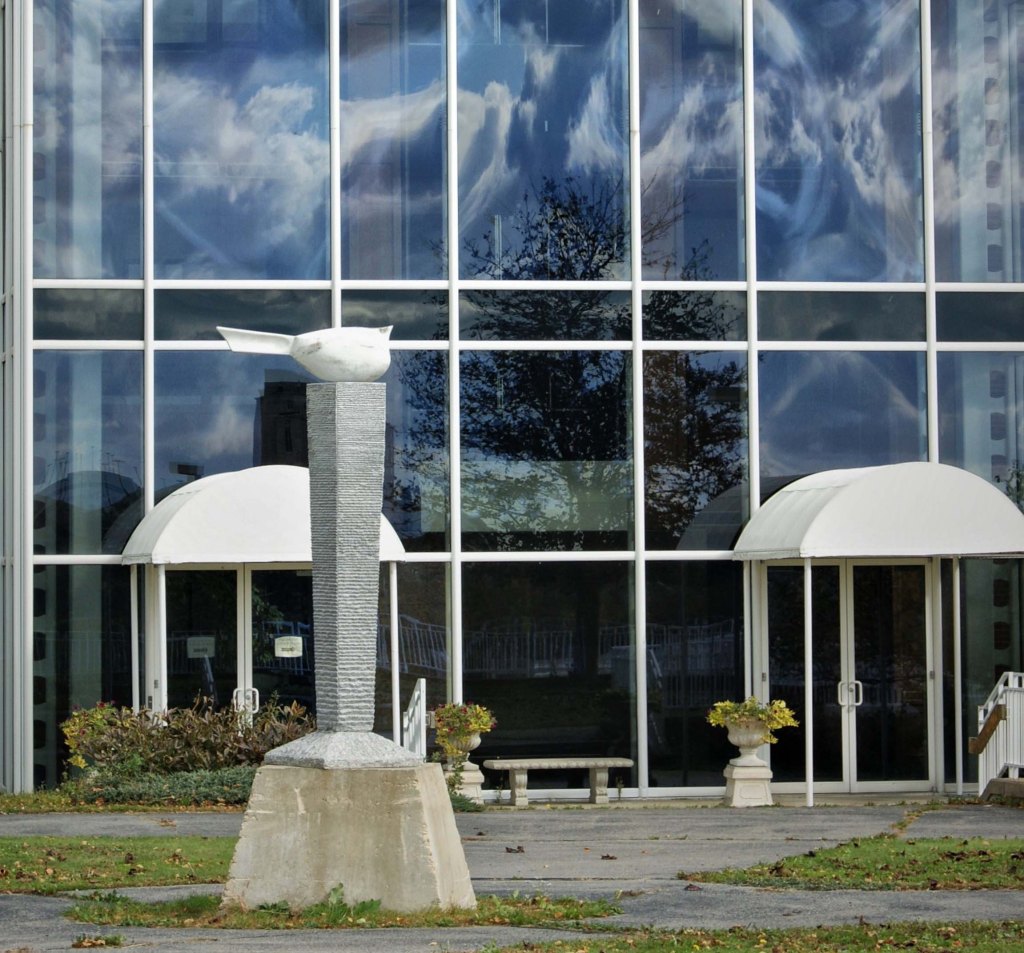
Art is an expression of words, ideas, stories, and even music from its creator’s soul. Listening closely to this simply shaped , plump, little bird sitting on its intrically designed pedestal amidst a reflected world of clouds and trees, one hears a sweet song.
Along with His eternality, God’s imagination and creativity are the first of His attributes about which we learn. Scripture tells us that “In the beginning God created” an incredibly magnificent, wildly imaginative, intricate, beautiful universe from nothingness, from a blank palette. His only instrument-His voice! The power of His Words revealed his mind and birthed a cosmos originally filled with goodness which evidenced His magnificent glory and His love and provision for humanity.
Scripture also presents the image of God as a potter sculpting an especially important element in His creation, forming man from the dust of the earth, breathing life into him, making him a rational, relational being, and bestowing upon him godly attributes.
Created in God’s ” image”, mankind has this remarkable capability to honor or abuse God’s gifts. Whether designing, crafting, sculpting, painting, dancing, writing, performing, producing music, or drafting and constructing communities, we express our minds, feelings, ideas, and imaginations in artful wonders and words and patterns and blue prints. We may not always understand the mind or vision or motivation or feeling behind an artist’s work, but all artistry should reflect God’s character by bringing something good into the lives of others. Whether building bridges or caning chairs, Scripture instructs us to do “whatever (we) do or say” as Jesus would. (Colossians 3:17) He lived as “the radiance of the glory of God and the exact imprint of God’s nature.” (Hebrews 1:3) If creativity does indeed derive from God’s nature, it has the ultimate, divine purpose of honoring God and His creative goodness.
Whether intentionally or unintentionally, this little bird gives a nod to the ultimate Creator and Giver of all good gifts as it looks across the river toward a Church steeple pointing into the heavens. Hear the sweet doxology? “Praise God from whom all blessings flow…”
Art is an expression of words, ideas, stories, and even music from its creator’s soul. Listening closely to this simply shaped , plump, little bird sitting on its intrically designed pedestal amidst a reflected world of clouds and trees, one hears a sweet song.
Along with His eternality, God’s imagination and creativity are the first of His attributes about which we learn. Scripture tells us that “In the beginning God created” an incredibly magnificent, wildly imaginative, intricate, beautiful universe from nothingness, from a blank palette. His only instrument-His voice! The power of His Words revealed his mind and birthed a cosmos originally filled with goodness which evidenced His magnificent glory and His love and provision for humanity.
Scripture also presents the image of God as a potter sculpting an especially important element in His creation, forming man from the dust of the earth, breathing life into him, making him a rational, relational being, and bestowing upon him godly attributes.
Created in God’s ” image”, mankind has this remarkable capability to honor or abuse God’s gifts. Whether designing, crafting, sculpting, painting, dancing, writing, performing, producing music, or drafting and constructing communities, we express our minds, feelings, ideas, and imaginations in artful wonders and words and patterns and blue prints. We may not always understand the mind or vision or motivation or feeling behind an artist’s work, but all artistry should reflect God’s character by bringing something good into the lives of others. Whether building bridges or caning chairs, Scripture instructs us to do “whatever (we) do or say” as Jesus would. (Colossians 3:17) He lived as “the radiance of the glory of God and the exact imprint of God’s nature.” (Hebrews 1:3) If creativity does indeed derive from God’s nature, it has the ultimate, divine purpose of honoring God and His creative goodness.
Whether intentionally or unintentionally, this little bird gives a nod to the ultimate Creator and Giver of all good gifts as it looks across the river toward a Church steeple pointing into the heavens. Hear the sweet doxology? “Praise God from whom all blessings flow…”
(Colossians 3:23;Exodus 31:1-6; 35:31-32; Ephesians 2:10; James 1:17)
from the constant, faithful, Sovereign One, in whom there is no shadow of turning,
from the One from Whom all blessing flow,
from Israel’s Champion who assures , “…fear not, for I am with you; be not dismayed, for I am your God; I will strengthen you, I will help you, I will uphold you with my righteous right hand, (Isaiah 41:10)
from the One who forgives, redeems and restores those who call upon Him in faith alone,
from the One who moves insurmountable mountains, turns weakness into strength, changes difficulties into joy, and fills trials with grace and mercy,
from the One who makes life into “good” as it conforms to the image for which He created it to be,
from the God of perfect gifts and of
all comfort, hope, peace, joy and love,
from the One who promises never to leave or forsake those who seek His Kingdom!
from the constant, faithful, Sovereign One, in whom there is no shadow of turning,
from the One from Whom all blessing flow,
from Israel’s Champion who assures , “…fear not, for I am with you; be not dismayed, for I am your God; I will strengthen you, I will help you, I will uphold you with my righteous right hand, (Isaiah 41:10)
from the One who forgives, redeems and restores those who call upon Him in faith alone,
from the One who moves insurmountable mountains, turns weakness into strength, changes difficulties into joy, and fills trials with grace and mercy,
from the One who makes life into “good” as it conforms to the image for which He created it to be,
from the God of perfect gifts and of
all comfort, hope, peace, joy and love,
from the One who promises never to leave or forsake those who seek His Kingdom!
It’s breezing up, and these day sailors are heading out where nothing but ocean waters and vast skies stretch from horizon to horizon; out where human insignificance and fragility become a reality; out where our imaginations reach to God’s greatness.
“There’s a wideness in God’s mercy/like the wideness of the sea…,” are words from a hymn written in by Frederick Faber in 1862. A half century later, Frederick Lehman, realizing how limited and meager our imaginations and vocabularies are, grappled with the indescribable, immeasurable love of God and penned the words to another hymn: “The love of God is greater far/Than tongue or pen can ever tell/It goes beyond the highest star/And reaches to the lowest hell…//Could we with ink the ocean fill/And were the skies of parchment made/Were every stalk on earth a quill/And every man a scribe by trade/To write the love of God above/Would drain the ocean dry/Nor could the scroll contain the whole/Though stretched from sky to sky.”
The Apostle Paul was equally convinced “that nothing can ever separate us from God’s love. Neither death nor life, neither angels nor demons, neither our fears for today nor our worries about tomorrow—not even the powers of hell can separate us from God’s love. No power in the sky above or in the earth below—indeed, nothing in all creation will ever be able to separate us from the love of God that is revealed in Christ Jesus our Lord.” (Romans 8:38-39 (NLT2)
Such sentiments may seem emotional, poetic, embellishments, and hyperbole! However, the incarnate Christ is the greatest expression of these truths about God’s deep love. His teaching, wisdom, promises, life, death and powerful resurrection embody God’s amazing, intentional, unconditional, redeeming, restoring mercy. With the persistent wind of faith, we can sail that ocean of amazing grace and divine love to the distant horizons of eternal hope.
Sometimes we resist change, often for good reasons or for reasons that not everyone understands. Other times we embrace and aggressively exploit innovations, “advances,” and different ideas with delight. Discoveries intrigue, and technologies lure. However, time changes “things” for all of us; generations come and go with different ways and tools for dealing with life.
What drives us to think or do, or not think or not do, what we think or don’t think or do or do not do? The answers lie buried somewhere within the complexities of our natures, our varied personalities which are formed by heredity, experiences, and personal motivations which may arise from needs, desires, and beliefs. But the substrata for how we approach life is the search for happiness. We strive for an internal calmness, a sense of peace and wholeness, and a socially acceptable self image. We want to feel good about who we are and what we do. We want to be happy! So, we make life about us. We create our own images from what we think we deserve and who we should be. In that process, we easily forget that we are intended to be images of God.
Perceptions of how to achieve a good life may differ, but we often try by seeking success, garnering wealth, attaining power, achieving acclaim, expressing our intellects, displaying our talents, finding acceptance, developing comforting, encouraging relationships, and doing good things. We hope our values will bring us peace, joy, and contentment.
Achieving and accumulating do have temporary emotional highs and social benefits. We proudly accept the accolades and adulation and enjoy the glory and good feelings which our efforts bring. Often God is not found in the credits! However, King Solomon, a man of enormous wealth, considerable intellect, wonderful advantages and opportunities, grand hobbies, worldly pleasures, and benevolent work, concluded that all his life’s works added up to nothing but vanity without God in the mix. (Ecclesiastes) Myriads of other successful men and women testify to the self-buoying but transitory and eventual meaninglessness of human glory and honors. When our attempts don’t satisfy, despair, depression, anxiety, addictions and rebellious, self destructive behaviors rob us of the peace we desperately seek.
If those statements are true, they draw us back to the age old question raised and answered by the prophet Micah: “O man, what is good; and what does the LORD require of you but to do justice, and to love kindness, and to walk humbly with your God?” (Micah 6:6-8) That very much sounds like Jesus’ summary of the meaning of the moral code of loving God with all one’s being and one’s neighbor as one’s self.
As relational beings, our joy resides in loving relationships- never in achievements and accumulations alone. Deep satisfaction is a function of a relationship with God first and then with others. One stated purpose for Jesus’ incarnation is to make life a joyful possibility. (John 15:11) He showed up to heal our broken relationship with God, to redeem and restore us, and to show us the path of deeply spiritual, sustainable, God-given blessedness despite the fact that his list of happy people is counterintuitive and countercultural: the poor in spirit, those who mourn, the meek, those who hunger and thirst for righteousness, the merciful, the pure in heart, the peacemakers, and the persecuted. (Matthew 5) Those are scarcely the “happy” people or attitudes we would naturally seek or counsel others to seek.
However, If we dissect Jesus’ self-effacing, happiness criteria, they focus on repentance, sacrifice, self denial and love which is without self absorption or self benefit. He knew and modeled the deep joy of seeking and obeyed God’s purposes for his life. He loved others with the ultimate love even while suffering the worst misunderstandings, rejections, mockeries, and cruelty mankind could conger up. Within those tough circumstances and with that purposefulness, he could say that if we believe him and follow his teachings “… you will abide in my love, just as I have kept my Father’s commandments and abide in his love. These things I have spoken to you, that my joy may be in you, and that your joy may be full. (John 15:10-11)
Those thoughts reorient us away from ourselves to God, away from self-reliance to dependence upon what God has done and does to give us peace and hope, away from urgent and frenetic self promotions to satisfaction with God’s love and care and perfect guidance, and away from self-righteous arrogance to a humble, believing faith which lives God’s grace. In the words of the Psalmist: “You make known to me the path of life; in your presence there is fullness of joy; at your right hand are pleasures forevermore.” ( Psalm 16:11) Happiness is the gift of knowing God.“Whoever gives thought to the (scripture) will discover good, and blessed is he who trusts in the Lord.” (Proverbs 16:20) Delight yourself in the Lord, and he will give you the desires of your heart. (Psalm 37:4)Trust in the LORD with all your heart, and do not lean on your own understanding. In all your ways acknowledge him, and he will make straight your paths. (Proverbs 3:5-6)
Shakespeare’s Macbeth said life is but a shadow! Philosophers, writers, and poets of all generations lament that same lament about the brevity of life and the elusive search for meaning. King David once prayed, “We are here for only a moment, visitors and strangers in the land as our ancestors were before us. Our days on earth are like a passing shadow, gone so soon without a trace.” (1 Chronicles 29:15 (NLT2) (The long ,complex genealogical records chronicled in those Bible books of history vividly convey that truth!)
We all seek purpose, hope and joy within our life’s short timespan. For many, life is not only brief but is unhappy! We assume that achieving happiness is our struggle to win, but Scripture teaches that seeking and relying upon God, His merciful, saving grace, His transforming power, and His good purposes for our characters will change our thoughts and attitudes and lead to inner peace.
Not all who seek fulfillment and happiness will agree. We may resist God, but if we miss Him, we will have missed life’s deepest meaning and ultimate hope! God “satisfies the longing soul, and the hungry soul he fills with good things” (Psalm 107:9)










 Sweet Words from Maine