Early morning and ” a tree planted along the riverbank \” of Middle River, Marshfield, Maine
From within the confusing cacophony of voices inundating us, hear the ancient Psalmist’s song and timely advice:
” Oh, the joys of those who do not follow the advice of the wicked, or stand around with sinners, or join in with mockers. But they delight in the law of the LORD, meditating on it day and night. They are like trees planted along the riverbank, bearing fruit each season. Their leaves never wither, and they prosper in all they do……. For the LORD watches over the path of the godly, but the path of the wicked leads to destruction.” (Psalm 1:1-6)
“Blow, blow, thou winter wind.” That was my Grandmother’s lament on cold, windy, winter days and the only line I remember from Shakespeare’s “As You Like It.” However, those words had a different meaning when sung by Shakespearean actors. They were a simile for the bitter disappointment of a relationship ruined by disloyalty: “Blow, blow, thou winter wind,/Thou art not so unkind/As man’s ingratitude;/Thy tooth is not so keen,/Because thou art not seen,/Although thy breath be rude.”
King David also knew the angst of betrayal. His friend, whom he thought to be a person of integrity and with whom he believed he had shared a special, deep, intimate friendship had been disloyal and dishonest and had “violated his covenant”, had maliciously manipulated David, and had deserted him. Like Shakespeare, our Psalmist King mourned his loss in song. Note his vulnerability and sadness: “For it is not an enemy who taunts me— then I could bear it; it is not an adversary who deals insolently with me— then I could hide from him.” (read Psalm 55: 12-23)
David also knew the pain of judgmentalism. After experiencing a moral failure, he had turn to Holy God in repentance and confession and had found mercy. (“I said, “O LORD, be gracious to me; heal me, for I have sinned against you!” (Psalm 41:4). But sadly, his “close friend” did not offer mercy but turned his back and walked away from him. He “lifted his heel “ against him. (Psalm 41:9)
Taking our hurt to God applies not only to wounds inflicted by difficult relationships but also self-inflicted pain resulting from our own wrongdoings and moral failures. Those offenses against God and our own conscience cause guilt and shame and often have consequences for others. Forgiveness should be sought from both God and those harmed, but God, as the Great Physician, floods our repentant souls with the balm of unconditional acceptance, love, forgiveness, redemption, renewal and hope. Life may not be “jolly” but can be lived with joy when God forgives us whether or not others do.
It is odd when we flawed and ungodly people can be so critical, uncompassionate and cruel to others caught in their vulnerabilities! Although friends never should condone or enable bad behaviors, love obligates us to restore each other, not to destroy with contempt and condemnation. King David’s disingenuous “friend” inflicted deep, gaping soul-wounds with pretense, judgmentalism, and malicious gossip. Sometimes, love and loyalty are lopsided and misplaced in a relationship.
Our responses to inflicted pain vary by our choosing. When we have been wronged, harmed, or shamed, forgiveness seems totally unfair. Why would we even consider mercy when a serious offense logically deserves retribution? Abuse, abandonment, unfaithfulness, dishonesty or even more heinous behavior may be excruciating to bear and cause scars on the soul. We may choose to give in to bitterness and anger, to strike out, to withdraw and be distrustful, or attempt to stuff hurt deep inside and deny ourselves the fullness God intends for our spirits. Shakespeare’s singer became bitter, cynical, sarcastic and chose denial! “Heigh-ho! sing, heigh-ho! unto the green holly/ Most friendship is feigning, most loving mere folly:/Then, heigh-ho, the holly!/This life is most jolly.”
Ultimately sin is against God. An “eye for an eye” form of justice perpetuates the ungodly cycle of ill will, anger, or even violence! It is counter productive, giving no relief to either the abuser or particularly the abused. Scripture teaches that vengeance is the specific domain of the Lord, that He will vindicate His people. (Deuteronomy 32:35-36) Not only did the King Psalmist recognize that God holds the unique, ultimate solution to all injustice, He is the only One who can fully heal unjust wounds. It is not retribution but God who “redeems my soul.” He did not “hide” his deep pain and anger but took it to God. “Evening and morning and at noon I utter my complaint and moan, and he hears my voice. He redeems my soul in safety from the battle that I wage, ” He had faith in God’s ultimate justice and left it there, “You, O God, will cast them down into the pit of destruction…”(Psalm 55:12-23)
King David’s sound recommendation is to “let go and let God.” “Cast your burden on the LORD, and he will sustain you; he will never permit the righteous to be moved.” In His mercy, God gives us dignity, purpose, and love, and the ability to understand divine forgiveness and the strength to give grace to others. Why forgive? An unwillingness to forgive is spiritually destructive.
As we move toward Easter, consider what Jesus taught us about reconciliation and restoration and what he revealed to us about abandonment, betrayal, abuse and hatred as he fulfilled God’s divine purposes by dying as a murder victim in a blatant miscarriage of justice and bigotry. He showed us how to forgive even the greatest offenses by responding with joyful forgiveness for his deserting friends and his tormentors and killers. (Hebrews 12:2) With a bruised, broken body and nails driven through his hands, his outstretched arms lovingly embraced the greater good for humanity as he asked His Father to “Forgive them because they do not know what they are doing.” .
The greatest reason to forgive much is because we have been forgiven much! As God’s image bearers, “Get rid of all bitterness, rage, anger, harsh words, and slander, as well as all types of evil behavior. Instead, be kind to each other, tenderhearted, forgiving one another, just as God through Christ has forgiven you.” (Ephesians 4:31-32)
Jesus’ humility and unimaginable, atoning sacrifice for our sins enables God’s forgiveness and absolves us from our wrongs against God when we believe. That is a choice we make. Similarly, all we can do in our human experience is willingly offer forgiveness. It is imperative that we let God handle unrepentant sin.
The winter winds will blow all kinds of brokenness our way, but “Human anger does not produce the righteousness God desires.” (James 1:20)
One of the bright moments during Maine’s late, cold winter months arrives when the seed catalogues do. They not only inspire dreams of fresh vegetables and beautiful flowers but also astound with the awesome awareness that a variety of plants are stored in tiny seeds, varied and peculiar to the hidden plant! Packed within each seed lies potential, some for great and alluring beauty and some for tasty fruit, but there is no transformation until the seed is sown. Only then, from a very tiny poppy seed, can a beautiful poppy grow! And only a poppy!
Amazingly, a seed’s size isn’t a measure of its plant’s bigness! Jesus used the simile of a very small, mustard seed as being like the Kingdom of Heaven. As the realities of God, His grace, and His authority grow and mature in individual believers, they become Kingdom dwellers. And as generation after generation reseeds this reality, the community of believers is perpetuated into a mushrooming, eternal Kingdom.
Although a plentiful, pleasing harvest may emerge from whatever and wherever seed is disseminated, proper nurturing and caring guarantee the best results. The Psalmist poetically tells us that “Those who plant in tears will harvest with shouts of joy. They weep as they go to plant their seed, but they sing as they return with the harvest.” (Psalm 126:5-6 (NLT2),
That is true of living and sharing the Gospel. Wherever tiny seeds of grace, forgiveness, love, peace, redemption, reconciliation, dignity, meaning and purpose are compassionately sown, they will feed a spiritually hungry world and eventually produce an abundant and timeless harvest. James reminds us that “…those who are peacemakers will plant seeds of peace and reap a harvest of righteousness.” (James 3:18 (NLT2)
With morning’s first light, as the sun climbs over the horizon and heaven turns the page to a new day, God graciously gives us a new beginning.
The faithful love of the LORD never ends! His mercies never cease. Great is his faithfulness; his mercies begin afresh each morning. I say to myself, “The LORD is my inheritance; therefore, I will hope in him!” (Lamentations 3:22-24 (NLT2)
Is that our first morning thought or even fleeting awareness? All too often, we are immediately immersed in the day’s plans, desires, needs, and demands which leave little room for God-thoughts and appreciation for what our lives are all about.
In the early 90’s, Alabama released a number one country hit called “I’m in a Hurry”. The recurring refrain is: “I’m in a hurry to get things done/Oh I rush and rush until life’s no fun/All I really gotta do is live and die/But I’m in a hurry and don’t know why.”
Frenetic living leaves little room for contemplation of the big picture- that God is working His good purposes for and through us. The Psalmist understood that experiencing God is a process, that he was “the work of (God’s) hands“, and that he could trust God’s promises.
“Though I walk in the midst of trouble, you preserve my life …The LORD will fulfill his purpose for me; your steadfast love, O LORD, endures forever. Do not forsake the work of your hands.” (Psalm 138:7-8)
Are we aware of God’s faithful and merciful work in our lives? Not just when the sun shines but when adverse winds blow and confusing clouds roll in? And it gets even better!
There could be no greater demonstration of that “faithful love” and “unending mercy” than Christ, who sacrificed his life for us, promises not to forsake us, and gives us eternal hope. (Matthew 28:20, Hebrews 13:5)
Robert Frost’s “Birches” has been a long time favorite of mine, probably because it conjures up some special childhood memories of swinging on birches.
“So was I once myself a swinger of birches/ And so I dream of going back to be”
But it is more than nostalgic verse. At one point Frost states, “ But I was going to say when Truth broke in”. As he swings between joys experienced, the realities of being earth-bound, and the mysteries of life, Frost ignites imaginations, ushers us back to treasured places, and gives a nod to ultimate things.
He had the tremendous gift of transforming simple, memorable experiences into profound thoughts. This poem about wistful remembrances of climbing slender birches to their tops and swinging gently back to ground is tense with yearning for innocence and an unencumbered youthful enthusiasm in a world weighed down by adult responsibilities, drudgery and restrictive realities which have subdued his spirit and bent his dreams like the ice-storms have the birches. He longed for the thrill and resilience of his boyish aspirations, discoveries and conquests.
” But swinging doesn’t bend them down to stay/ As ice-storms do.”
“And they seem not to break; though once they are bowed/ So low for long, they never right themselves”
We easily identify with being overwhelmed, unsure or directionless and wanting to walk away, wishing for a fresh start, fantasizing new beginnings, wanting rebirth.“It’s when I’m weary of considerations/ And life is too much like a pathless wood”“I’d like to get away from earth awhile/ And then come back to it and begin over.”
This is escapism at its best! We don’t have do-overs or reprieves from the past and are familiar with self doubt and dreams of change and breaking free. But our poet is ambivalent. He realizes life is fragile and becomes resigned to whatever his lot is and the good that it holds. His religious thoughts seem tentative, filled with the ambiguity that pervades the tenor of the poem. Perhaps superstitiously, he fears some sovereign being or fate might take his imaginations and his indecisiveness at face value and “snatch him away. “May no fate willfully misunderstand me/ And half grant what I wish and snatch me away/Not to return.”
Even giants of faith entertain doubts about God’s character. St. Augustine said, “Doubt is but another element of faith.” Walk through Genesis with Abraham or through Exodus in Moses shoes, sit in the ash heap with Job, follow the trajectories of the nation of Israel, hide in a cave with Elijah, anguish with the Psalmist, stand with the Thomas before Jesus, agonize and weep with the disciples at Jesus’ tomb, tremble in despair with Martin Luther, speak with C.S. Lewis or read a despondent Mother Theresa’s letters,.
We doubt what our senses can not verify. Yet, we all hold beliefs which have limited proofs and therefore uncertainties. Whether one does not believe or is uncertain about the existence of God or whether one believes in His existence, no amount of philosophical or theological hubris is without moments of tentativeness. Frost seems to hold onto, or at least doesn’t dismiss, the reality of a sovereign who has authority over life and death.
Like the ice storms bending the birches, life’s trials and doubt can be spiritually debilitating, but proactively preparing for those insults holds one up in disorienting times.(Ephesians 6:11-13)
The Christian faith is deeply rooted in the person of Jesus Christ and the revealed Word of God. Disciplining oneself in Scripture meditation; considering God’s character and Jesus’ life and teachings as God’s expressed love to us; not forsaking worship experience and practices; utilizing liturgy, catechisms, covenants, hymns, and faith statements; fellowshipping and counselling with those one trusts; praying; and just persevering will carry one through the dark night of faltering faith, rejuvenating one’s spirit to spring back to joyful heights again.
Many inanimate objects have emotional value, but they do not emote. However, if we allow our imaginations to anthropomorphize this little dinghy, we might wonder if it will be disappointed after enduring a long, cold winter while sitting on its porch and patiently waiting for some child to tug it to the water’s edge for a spring launching.
“Waiting” and “hoping” over-arch human existence. They are built into the rhythm of every day, the cycle of seasons, and the length of our lives. However, despite the old adage, not everything comes to him who waits. Dreams vanish; hopes are dashed; some answers never arrive! We don’t always get the bike under the Christmas tree or the diamond ring or the job we want, or the Covid vaccine. The “final answer” to our efforts may not be the anticipated one.
How we respond to disappointment is a choice. It may be with frustrated petulance, anger, and depression, but thankfully, “hope” is a possibility! Patience leads to “experience; and experience, hope.” (Romans 5:4) This hope is an optimistic mindset which moves us forward. We may use “delays” to define actual needs and to adjust to circumstantial realities. Adversity may produce patient and enduring spirits, give us greater appreciation for the pleasures we have, endue us with a compassion for others, and humble us by reminding us that we are vulnerable and not entitled.
Ultimate hope is an essential ingredient in happiness, which is difficult to find in a meaningless, purposeless world. We all have belief systems which attempt to make intelligent, philosophical deductions from experience, knowledge, and observation about who and why we are. In the process, we tend to become self loathing because we fail to live up to who we believe we should be. Whether our viewpoint becomes atheist, agnostic, Christian, or some other creed, we believe. We hold either a nihilistic faith in which ultimate meaning is an attempt at self-fulfillment and pursuit of pleasure, or we embrace a hope-filled faith in which God exists and gives meaning and dignity to life beyond ourselves. Only one of the two deduced belief system can be true, a fact important when considering ultimate destiny.
The thing about Christian hope/confidence is that meaning and purpose lie within a relationship with Creator God. They do not rest on our fallibility, limited intellect, or the meager philosophies of others but are beautifully established on God’s love for us and the good news of His Gospel that that our fallen natures are redeemable and that creation, which Scripture says is “groaning” for redemption, will one day be restored. There will be a day when things are set right. (Romans 8:23) (Revelation 21:1) Although mixed with anticipation and patient waiting, this kind of “hope” is “assured, just not totally experienced” yet.
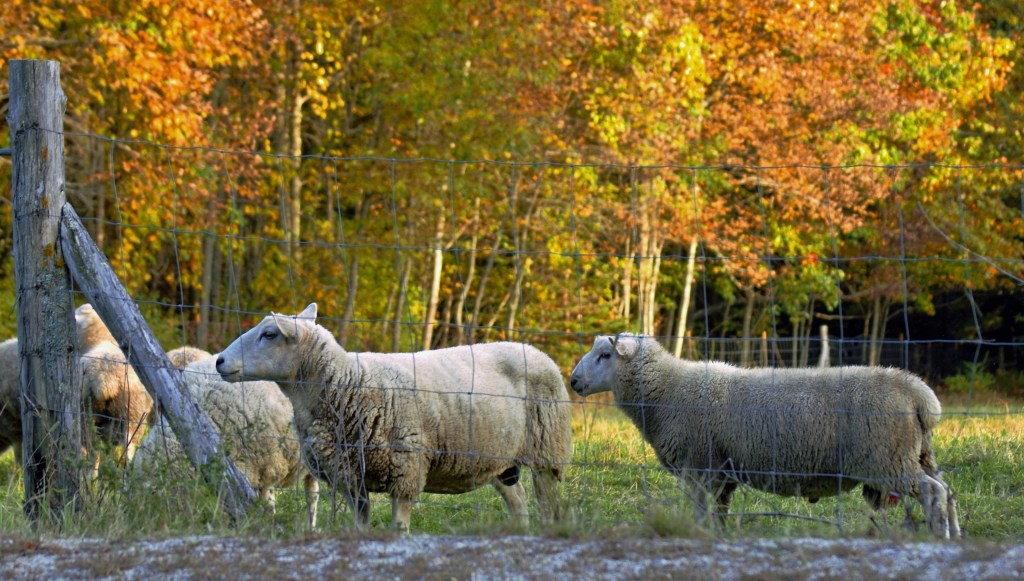
There is something special about sheep, something both ancient and pastoral! Perhaps it is because Scripture presents beautiful word pictures of how God shepherds his people. Trusting and obeying the Shepherd’s voice lead to “green pastures” and “still waters”, to fulfillment and security. However, the Psalmist sounds a cautionary note about inattentive, straying sheep because they have left the shepherd’s protective care:
“Let us kneel before the LORD our maker, for he is our God. We are the people he watches over, the flock under his care. If only you would listen to his voice today! “(Psalm 95:1-7)
In view of Israel’s experience with God, the Psalmist also encouraged “all the earth” to joyfully worship and honor God as Creator and Shepherd.
“Shout with joy to the LORD, all the earth! Worship the LORD with gladness. Come before him, singing with joy .Acknowledge that the LORD is God! He made us, and we are his. We are his people, the sheep of his pasture.” (Psalm 100:1-3)
Christians and Jews alike confidently quote or sing “The Lord is my Shepherd, I have no wants” as vocal testament of their faith in “The Lord” who cares for them now and “forever.” The New Testament presents Jesus as the Lord and Good Shepherd, who brings the Kingdom of God, the reality of God, to those who trust and attend to his voice. They know and love him because he loved them enough to sacrifice himself for their life and security. As Shepherd, he confidently reiterates and restates the hope of Psalm 23, the promise that God is now present with His people and will dwell with them forever:
“Fear not, little flock, for it is your Father’s good pleasure to give you the kingdom.” (Luke 12:32)
Boundaries are essential for safe and happy living. Our natural world is guarded by certain principles, and we are fenced in by physical capabilities, intellectual limits, and moral constraints. With few exceptions, reason and conscience restrict human behavior. Our sense of right and wrong enables us to determine conduct which protects us from ourselves and keeps others safe from our bad inclinations. Evil results when those boundaries are corrupted.
Without these confines, men and women are emotionally and morally unstable. “A man without self-control is like a city broken into and left without walls.” (Proverbs 25:28) Without walls, we are vulnerable, unable to discern who or what persons or philosophies may or may not enter our hearts and minds, and can easily be destroyed or headed for turmoil because internal integrity can not be maintained.
For some, the concept of right and wrong raises the important question of why is there evil? There has to be a transcendent morality, some absolute standard of holiness and purity to which we ascribe, or morality becomes subjective, and we are free to determine our own morality based on what we think or desire. That would lead to chaos and to such horrific evils as racism or the killing of six million Jews to produce a “pure” race, and to declaring such wickedness as beneficial. Some use this argument of transcendent morality as proof of the existence of God, who has prescribed life principles as the basis for ethical living and expressing love so humanity can be healthy and happy. These laws may not be accepted by everyone as from God or as absolute, but non-adherence to them absolutely leads to unstable, unhappy, and unhealthy living.
Christ said he was bringing the Kingdom of God or the reality of God into our lives because we are broken and need his help to be righteous. Scripture proclaims that God’s love is too great to fully comprehend and that Christ died once for everyone who has or ever will exist. However, we discover that His Kingdom has its confines as well.
So, if God in Christ is so loving, why would he exclude anyone from His Kingdom? Scripture makes it equally clear that access to God’s Kingdom is restricted to those who wish to live under His good reign, to those who will trust Him and submit to His authority and rule. There are no “ungraced” scoundrels, no rebellious anarchists who want to subvert the peace and love and transcendence of the Kingdom with their own substandard, inglorious ways. Therefore, living within the confines of faith in God’s grace leads to living in His Kingdom. Otherwise, chaos would reign.
While teaching his followers about proper life perspectives, Jesus talked about the importance of being genuine, that seeking approval and self promotion by showing off superficial, self-righteous piety is arrogant and disingenuous, that the distractions of our material world capture our imaginations and desires and divert us from the more important matters of our spirits, and that we have higher purposes. Although we make life almost entirely about what we need , desire, or cherish, our frames are only dust. Life is about what God wants to accomplish in us as we try to survive in a flawed world with our flawed natures. (Matthew 5-7) Created in God’s image, we are made to live spiritual lives which will display that glory for eternity.
Using the natural world, he illustrated how much God cares for us, that we do not need to be anxious, and that God will help us execute the good purposes planned for us. He taught us how to pray to that end. He spoke of how God feeds the birds and clothes the lilies and said we should “Consider the lilies of the field, how they grow: they neither toil nor spin, yet I tell you, even Solomon in all his glory was not arrayed like one of these”
God has given mankind something far more beautiful than what we can manufacture on our own. By His grace through faith, God gives life to our spirits. Even though some lilies blossom for only a day, they are endued with fragrant beauty which fulfills their creative purposes of reflecting and honoring God and bringing pleasure to this world without even trying. Albert Orsborn’s hymn “Let the Beauty of Jesus be Seen in Me” speaks to that thought and the purpose for mankind.
Let the beauty of Jesus be seen in me/All His wonderful passion and purity/May His Spirit divine all my being refine/Let the beauty of Jesus be seen in me.
There he perched, King of the Birds, quietly surveying his wintry kingdom while sitting high atop an old dead tree on a little island in Sullivan Harbor. Majestic, magnificent, powerful, and properly feared. Not a gull was in sight! As I watched him, I was reminded of several Old Testament passages which beautifully and poetically reflect God’s sovereignty, justice, compassion, and the great hope that lies in knowing Him.
The Psalmist sang: “God looks down from heaven on the entire human race; he looks to see if anyone is truly wise, if anyone seeks God.” (Psalm 53:2)”He made heaven and earth, the sea, and everything in them. He keeps every promise forever. He gives justice to the oppressed and food to the hungry. The LORD frees the prisoners. The LORD opens the eyes of the blind. The LORD lifts up those who are weighed down… The LORD will reign forever. “(Psalm 146:5-10 )
God lovingly looks down while we look up… Isaiah lifts our thoughts to God’s transcendence: “…Look up into the heavens. Who created all the stars? (God, the Holy One) brings them out like an army, one after another, calling each by its name. Because of his great power and incomparable strength, not a single one is missing… Have you never heard? Have you never understood? The LORD is the everlasting God, the Creator of all the earth. He never grows weak or weary. No one can measure the depths of his understanding. He gives power to the weak and strength to the powerless….those who trust in the LORD will find new strength. They will soar high on wings like eagles. They will run and not grow weary. They will walk and not faint.” (Isaiah 40:22-31)
These descriptions speak powerfully about God’s passion and compassion for, and His presence with, His people. Although God is uniquely God, He is both Almighty God and our tender Father upon whom we depend and to whom we pray, “Our Father, Who art in heaven,…“ He is to be awed, but unlike the eagle, He is not remote from us. He is the source of purpose, spiritual strength, and satisfaction. “… joyful are those who have the God of Israel as their helper, whose hope is in the LORD their God. (Psalm 146:5)
He brings His forever Kingdom to us when we choose to live under His reign.










 Sweet Words from Maine